How to Re-Register a UK Car in Spain, Step by Step
Re-registering a UK car in Spain takes six main stages, from telling the DVLA before you leave to fitting your new Spanish plates. With complete paperwork, the Spanish side usually takes a few weeks.
Since the UK left the EU, Spain treats cars from Great Britain as imports from a non-EU country, so the process involves customs as well as the traffic authority. Here is how it works.
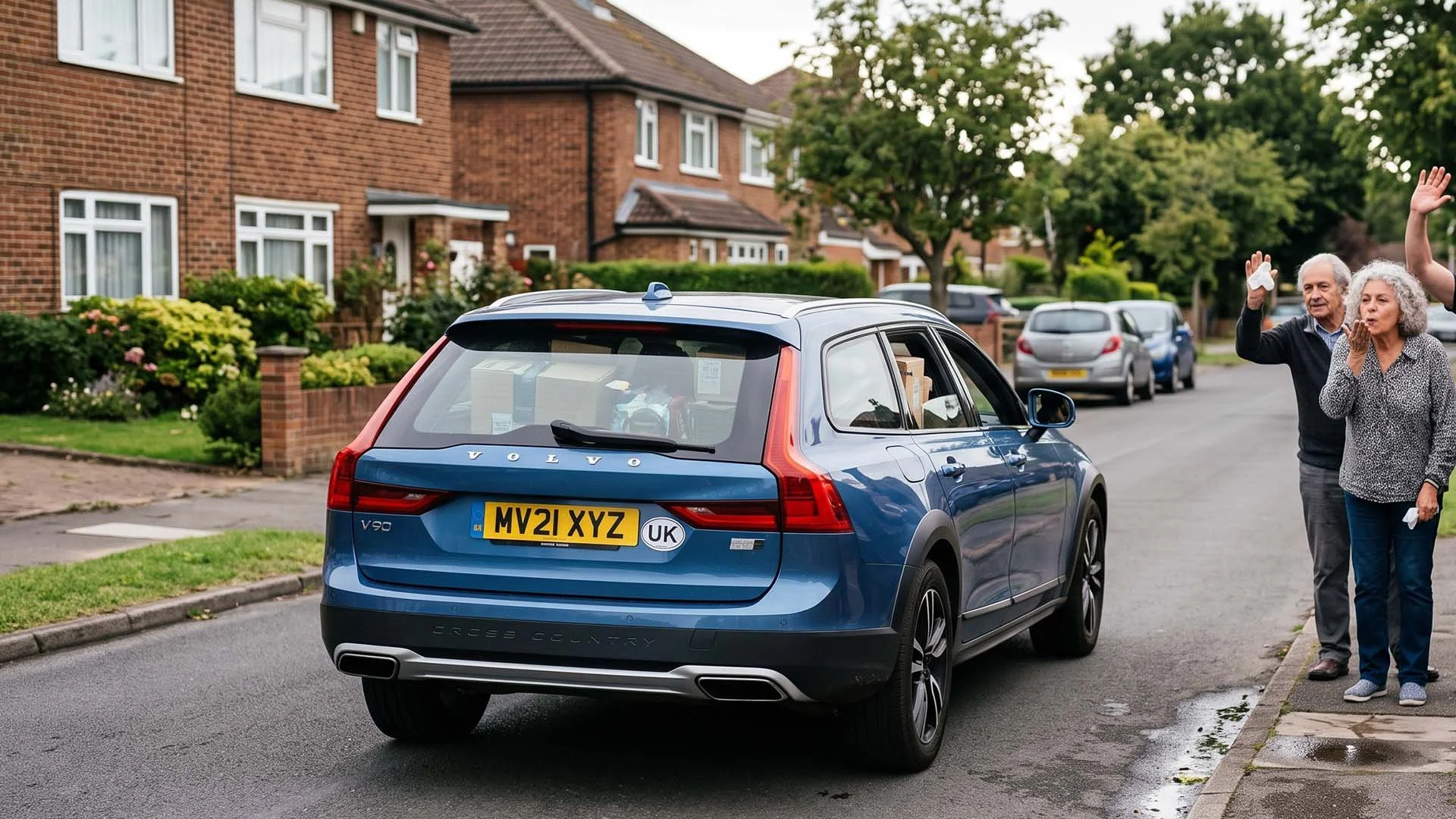
Step one: tell the DVLA before you go
If you are taking your car out of the UK for 12 months or more, GOV.UK treats this as a permanent export. Fill in the "permanent export" section of your V5C logbook, detach it and send it to DVLA, Swansea, SA99 1BD. Keep the rest of the logbook, because you will need it to register the car in Spain. If you are due a vehicle tax refund, it usually arrives within four to six weeks.
The DVLA cannot send a logbook to an address outside the UK, so if your V5C is missing, apply for a replacement before you leave. If you have a private number plate you want to keep, transfer or retain it before the car is exported.
Step two: gather your personal documents
You will need your passport, your NIE and residency documents (for UK nationals this is usually the TIE card), and your certificado de empadronamiento, known as the padrón, from your local town hall. The padrón proves your address and helps show when you became resident.
If you are claiming the transfer of residence exemption, you will also need evidence that you lived in the UK for the previous 12 months and evidence of when you moved. Examples include tenancy or property documents and a certificate from the consulate.
Step three: customs clearance
The DGT confirms that cars from Great Britain imported after 1 January 2021 must meet the rules for vehicles from outside the EU. (Northern Ireland is treated differently.) This means your car needs a customs import declaration, called the DUA. For registration, it also needs an import certificate, known as the H1 certificate, unless the import is already recorded on the ITV card.
If you qualify for the transfer of residence relief, this is the stage where the exemption from import duty and VAT is applied. If you do not, duty and VAT are paid here. Our guide to registration costs explains how much.
Step four: the import ITV
The car must pass a Spanish technical inspection at an authorised ITV station to receive a Spanish technical card, the ficha técnica. This normally needs either the manufacturer's Certificate of Conformity or an engineer's technical report called a ficha técnica reducida, along with your original V5C. Right-hand-drive cars often need changes to the headlamps and rear fog light first. Our ITV guide covers this in detail.
Step five: registration tax and road tax
Before the DGT will register the car, you need proof that the registration tax has been paid, is exempt or does not apply. The tax is officially the Impuesto Especial sobre Determinados Medios de Transporte, and the proof is form 576, 06 or 05 from the Agencia Tributaria. You also need proof that you have paid the local road tax, the IVTM, to the town hall where you live.
Step six: DGT registration and plates
With everything in place, the application goes to the DGT with the registration fee, currently €99.77. Once it is approved, you receive your Spanish registration number and the registration certificate, the permiso de circulación. You then take the original documents to an authorised plate maker to have your Spanish number plates made.
If you need to drive the car while the paperwork is processed, the DGT offers temporary green plates, valid for 60 days, for a fee of €20.61. The car must be insured and have a valid ITV to be driven on them.
How long does it take?
The DGT sets itself a maximum of three months to decide a registration application. In practice, Spanish administrative agents (gestorías) commonly quote two to six weeks from submitting a complete file. Add time for customs clearance, any work needed to pass the ITV and waiting for appointments, and it is sensible to allow several weeks from the day the car arrives.
The most common causes of delay are missing documents, a Certificate of Conformity that turns out not to be valid, incorrectly declared CO2 figures and mistakes in paying the registration tax. Having someone who knows the process check everything first makes a real difference.
Leave the paperwork to us
We can manage every one of these stages for you, alongside transporting your car. For a quote, email info@costa-cargo.com or call us in the UK on +44 7938 751 790 or in Spain on +34 711 022 816.
This guide is general guidance only. Procedures and fees change regularly, so please contact us for up-to-date advice on your own vehicle.